Dermaplaning — Benefits, Safety & What to Expect
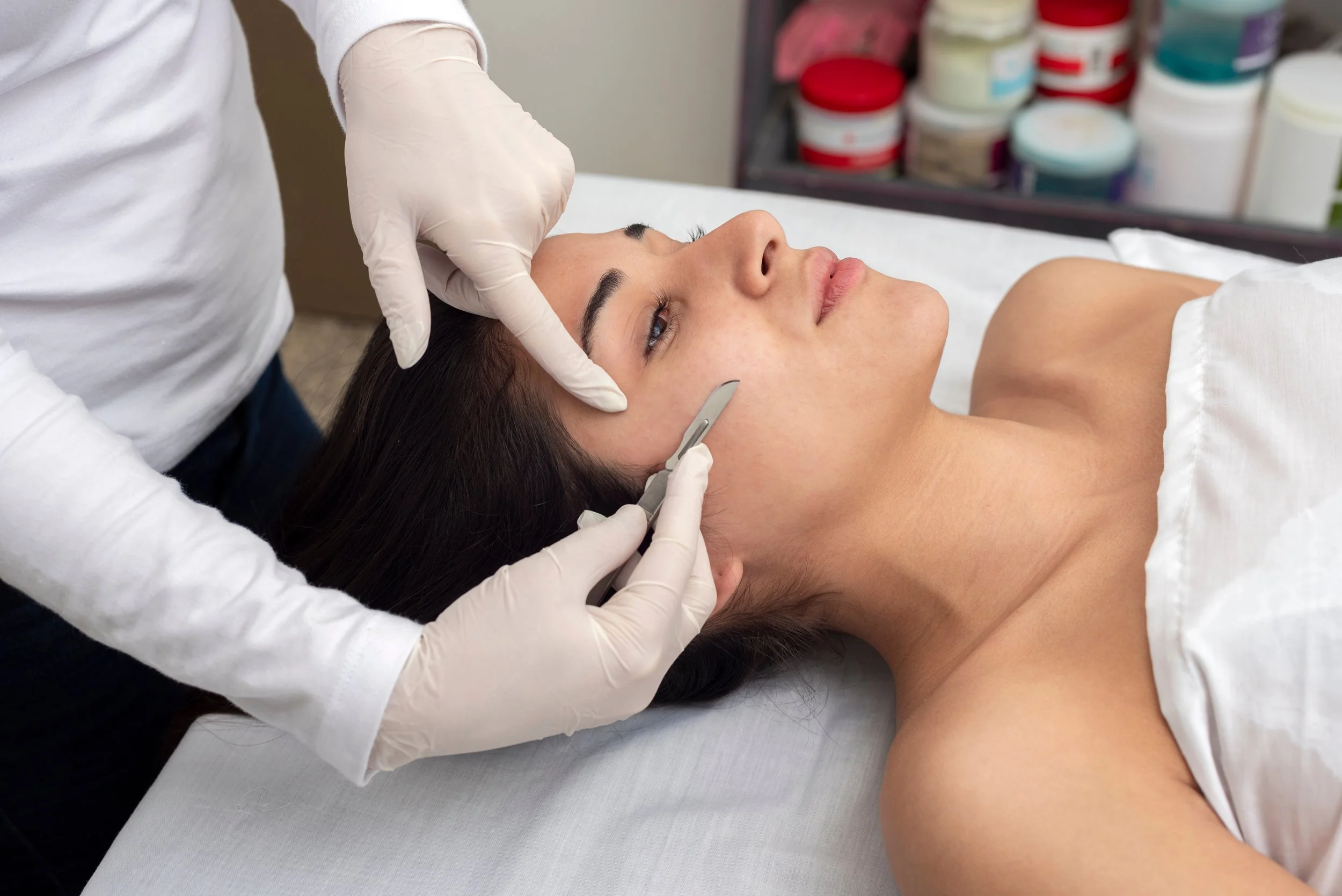
Dermaplaning has become one of the most popular facial treatments for achieving instant smoothness and a radiant, glowing complexion.
But what exactly does it do — and is it safe for everyone?
Here’s your complete, easy-to-understand guide to dermaplaning, how it works, and why it may be the perfect addition to your skincare routine.
What Is Dermaplaning?
Dermaplaning is a professional exfoliating treatment that uses a sterile, medical-grade blade to gently remove:
dead skin cells
built-up debris
trapped oils
peach fuzz (vellus hair)
This reveals a fresh, smooth, and brighter layer of skin underneath.
It’s painless, relaxing, and offers immediate visible results.
How Dermaplaning Works
Using light, precise strokes, your esthetician manually exfoliates the top layer of your skin.
This helps:
smooth texture
brighten dull areas
remove dry patches
allow skincare to penetrate deeper
create a flawless base for makeup
Unlike shaving, dermaplaning is a controlled, professional exfoliation technique performed at a precise angle with proper sanitation and skin assessment.
Benefits of Dermaplaning
Dermaplaning offers a long list of immediate and long-term benefits:
✔ Instantly smoother skin
Your skin feels incredibly soft and silky right after the treatment.
✔ Brighter, more even complexion
Removing dull, dead cells reveals a fresh, radiant layer of skin.
✔ Better absorption of skincare products
Serums and moisturizers penetrate more effectively once buildup is removed.
✔ Flawless makeup application
Foundation sits smoother and more evenly on the skin.
✔ Helps reduce appearance of fine lines
By exfoliating surface buildup, lines look softer.
✔ Safe for most skin types
Even for sensitive or pregnant clients (when performed correctly).
✔ No downtime
You can return to your day immediately with glowing skin.
Will Dermaplaning Make Hair Grow Back Thicker?
No — it will NOT.
This is one of the biggest myths in skincare.
Dermaplaning removes vellus hair, which is soft, light, and fine.
It will grow back exactly the same as before — not darker, thicker, or faster.
Dermatologists confirm this repeatedly.
Who Is Dermaplaning Best For?
Dermaplaning is perfect for clients who want:
instant smoothness
brighter skin
even texture
better makeup application
gentle exfoliation
pregnancy-safe treatments
a glow before an event or photoshoot
It’s especially great for clients who can’t use chemical exfoliants but still need a deep refresh.
Who Should Avoid Dermaplaning?
Dermaplaning is safe, but not recommended during:
active acne breakouts
open wounds
eczema or psoriasis flare-ups
active cold sores
very reactive skin conditions
Your esthetician will assess your skin beforehand and recommend alternatives if needed.
What to Expect During the Treatment
A dermaplaning session is relaxing, gentle, and takes about 20–30 minutes.
You can expect:
a double cleanse
gentle skin prep
precise dermaplaning with a sterile blade
soothing serum and moisturizer
SPF protection if done during the day
You’ll immediately feel smoother and see brighter, more refined skin.
Aftercare Tips
After dermaplaning, your skin will be extra fresh and receptive.
Follow these simple steps:
keep skin hydrated
avoid heavy makeup for 24 hours if possible
avoid exfoliating acids or retinol for 48–72 hours
wear SPF daily
avoid touching your face too much
Your results will last about 2–4 weeks depending on your skin cycle.
Final Thoughts
Dermaplaning is one of the best ways to achieve instant smoothness, improved texture, and a brighter complexion — all with zero downtime.
It’s gentle, effective, and delivers visible results after just one session.
If you’re ready for smoother, glowing, makeup-ready skin, dermaplaning may be the perfect addition to your routine at La Reina Aesthetics.